
What is sensory integration?
Sensory integration is a neurological process of organising and processing information from the senses – sight, smell, hearing, balance (vestibular), body position (proprioceptive) and touch – in a way that lets us understand our environment and interact with it correctly.
How do difficulties show in everyday life?
Misinterpreting external and internal information may limit concentration and learning, coordinated movement, planning new tasks, social relationships and taking part in family activities. At school it can affect attention, motor skills, writing and completing tasks independently.
Assessment
- Observation of the child in a natural environment
- Interviews with parents and teachers
- Standardised tests
- Structured clinical observations
What does therapy look like?
Therapy happens through play, in a space offering a variety of vestibular, proprioceptive and tactile experiences. The child actively helps choose activities, while the therapist provides the right challenge, physical and emotional safety and a sense of success.
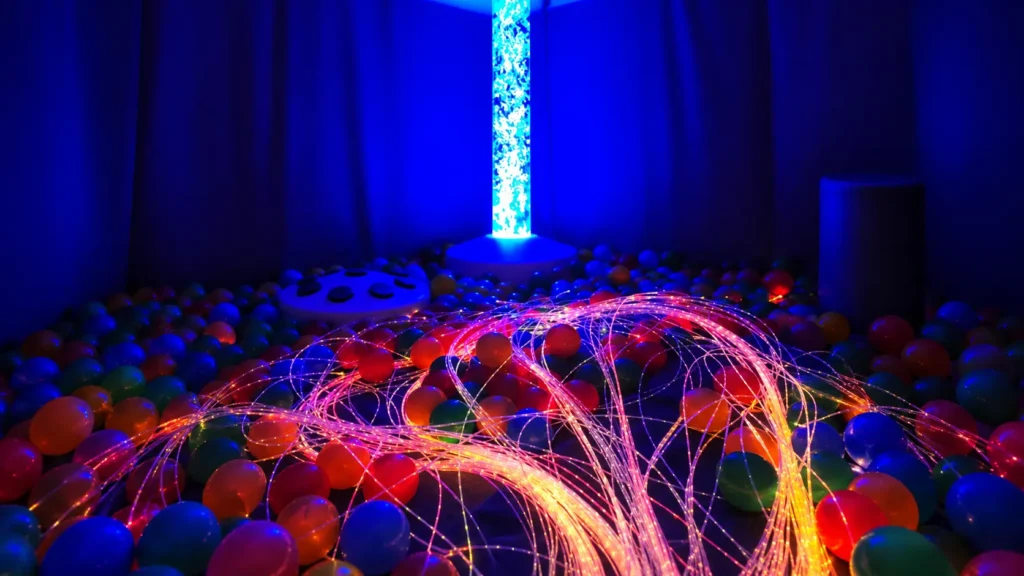
Snoezelen – the sensory room
Snoezelen, or controlled multisensory stimulation, originated in the Netherlands in the 1970s. It is a specially equipped room where the type, intensity and amount of stimuli are controlled – light effects, colours, sounds, music and scents. The goal is a balance between relaxation and activity in a safe environment. It requires no verbal communication, so it also works for children who don’t speak.
Sensory integration – the Focus System
The Focus System is part of integrated listening therapy. It consists of different programmes that provide multisensory stimulation of the brain and help create new neural connections. The Focus System uses pre-selected, acoustically modified therapeutic music combined with motor and cognitive activities.
The therapeutic music is delivered through special headphones that provide auditory and vestibular stimulation through bone conduction. This stimulates several areas of the brain and supports better integration of the senses.
At Kalinka, we use the Focus System with children of different ages. It is most often used with children on the autism spectrum, children with ADHD, delayed speech, sensory processing difficulties and difficulties with school skills.
Types of support
What support are you looking for?
THERAPY
Sensory integration
An individual plan for better processing of sensory information and functional skills.
Ask about assessment →SNOEZELEN
Multisensory room
Calming, focus and exploration in a controlled sensory environment.
Learn more →The first visit
What to expect?
First contact
You call or write to us; we direct you to the right specialist and book a time.
Getting to know you
A conversation with the parent and observation of the child through play, in a relaxed setting.
Plan and next steps
We explain the findings and agree on an individual support plan together.
Questions
Before your first visit
How do I know if my child has sensory difficulties?
If they react strongly to sounds, touch, clothing or food, constantly seek movement, or avoid swings and climbing – an assessment is worthwhile.
Is the sensory room only for children with autism?
No. It also helps children with developmental difficulties, anxiety, self-regulation difficulties, and for relaxation.
How long is a session and what does it cost?
Sessions last 45 minutes. Call 072 232 363 for the current price list – we will give you all the information in advance.
Are conversations confidential?
Yes. All information is strictly confidential and handled in line with data protection law.